Linen literacy · Pillow covers
Coyuchi Pillow Covers: How Texture, Fit, and Care Shape Your Choice
A pillow cover can change a room’s mood in an instant—but the best choice is about more than color. Fabric feel, dimensions, closure, and laundry needs all matter, whether you are dressing a sofa cushion or choosing a linen pillowcase for the bed. Here’s how to assess each detail before bringing a new layer into your home.
First, know which kind of pillow cover you need
“Pillow cover” is an umbrella term, and that can make shopping confusing. A decorative pillow cover is generally made for a cushion on a bed, sofa, or chair. It may have a zipper, envelope opening, or another closure and is often sold without the insert. A pillowcase, by contrast, is designed for a sleeping pillow and usually has an open end or flap that keeps the pillow inside while you rest.
The distinction matters because the two pieces have different jobs. A decorative cover helps define a room’s palette and texture; it may be removed when the space is in use or washed after everyday contact. A pillowcase sits against the face and hair for hours, so its hand feel, breathability, and laundering routine can be especially important. Their shapes and measurements are not necessarily interchangeable, even when both are described casually as pillow covers.
Before comparing Coyuchi pillow covers or related linen options, identify the intended use. Are you covering a square accent insert for the sofa, or replacing the pillowcase on a bed pillow? Check the listing’s exact product type and the dimensions of the item—not just a broad category name. That small step helps avoid a cover that looks promising but will not fit the pillow you already own.
Texture: the detail you notice before the label
Fabric texture is both visual and physical. A smooth, closely woven cover can create a more tailored impression, while a relaxed linen surface brings a natural irregularity that feels at home in casual, layered interiors. Linen’s characteristic texture comes from flax yarns and the way they are woven; tiny variations in the surface are part of the fiber’s appearance, not necessarily a flaw.
For a decorative pillow, texture can help a room feel finished without adding another strong color or pattern. A tactile cover placed beside smoother bedding or upholstery creates contrast and depth. In a bedroom, several linen textures can also work together, but the effect is most considered when one element leads: a patterned sheet, a softly rumpled duvet, or a more pronounced accent cushion. Repeating every texture at full volume can make a bed feel busy rather than inviting.
For a sleeping pillowcase, the question is more personal: do you like the feel against your skin? Relaxed linen can feel crisp or nubby at first, then soften with regular use and washing. It is also valued for breathability and moisture management. These qualities may make linen appealing to people who prefer a natural, airy sleep surface, although no fabric can guarantee a particular sleep temperature or comfort outcome for every person.
Product descriptions often use words such as “soft,” “washed,” and “relaxed,” but those terms do not replace the fabric composition or care instructions. Check whether the item is 100% linen, a blend, or another material, and look for information about finishing. A garment-washed textile, for example, has already undergone a washing process intended to create a more relaxed hand. The same label language can still feel different from one weave and construction to another.
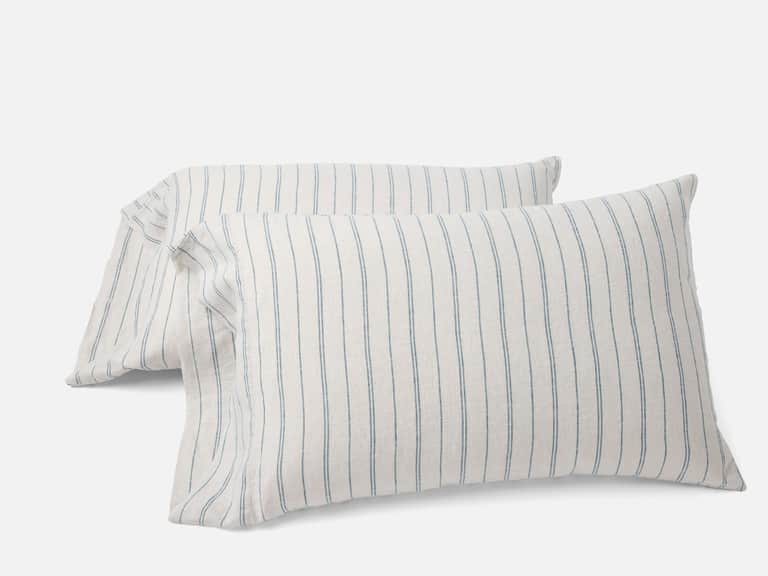
Coyuchi’s Organic Relaxed Linen Pillowcases are a bed-linen example rather than a decorative cushion cover. The listed details describe organic flax grown in France, woven into linen in Portugal, garment-washed, and finished with subtle pick-stitched cuffs. The fabric is described as breathable and temperature regulating, with softness that develops over time. That information can help readers understand the character of relaxed linen, but it should not be mistaken for specifications for a separate decorative cover.
Fit starts with measuring the insert
Even a beautiful cover can disappoint if it fits poorly. For a decorative pillow, measure the insert from seam to seam while it is lying flat, without compressing it. Then compare those measurements with the cover’s stated dimensions. A cover that is substantially larger than its insert may look slack; one that is too small can strain the seams or make the cushion difficult to fill.
Some shoppers intentionally choose a cover slightly smaller than a plump insert to create a fuller appearance. That approach can work, but it depends on the fabric’s structure, the insert’s firmness, and the closure. A rigid or tightly woven cover may be less forgiving than a flexible textile. If dimensions are listed as a range or the insert is unusually full, check the maker’s fit guidance before deciding.
Sleeping pillowcases follow standard size names such as Standard, Queen, and King, but dimensions vary by maker. Measure the pillow itself and compare it with the listed case size. A case that is too short may pull at the seams; an overly long case can leave excess fabric at the end. For a pillow with an unusual loft or shape, the measurements are more useful than the size name alone.
Also consider the depth and shape of the pillow. A thick sleeping pillow may need a case with enough width and length to accommodate it without compressing the fill. A square decorative cushion and a rectangular bed pillow require different proportions, even if both are described as “large.” When shopping online, record the pillow’s width and length before browsing; it makes comparisons faster and reduces guesswork.
- Measure the pillow or insert: note width and length, and avoid squeezing it flat.
- Read the product type: distinguish a pillowcase from a sham or decorative cover.
- Check what is included: a cover may be sold on its own, with an insert sold separately.
- Review the closure: it affects both the appearance and the ease of putting the cover on.
- Allow for construction: seams, flanges, and fabric thickness can affect the finished fit.
Fit is not only about the first day. Natural fibers can relax with use, and repeated laundering may affect a textile’s dimensions. Follow the care label, avoid assuming that all linen shrinks by the same amount, and be cautious about applying high heat unless the manufacturer specifically allows it. A well-matched cover should look composed without being stretched to its limit.
Closures: practical details with a visible effect
Closure design can be easy to overlook in a product photograph, yet it shapes everyday use. Decorative covers may use a zipper, an envelope-style opening, buttons, or another construction. A zipper can provide a neat edge and help keep an insert contained, while an envelope opening avoids a visible fastener and is often simple to use. Buttons can add a considered detail, but they may take longer to fasten and deserve a little extra care in the wash.
Think about where the pillow will live. A cover on a frequently used sofa may be removed often, so ease of opening matters. A decorative cushion on a bed may be handled less, making appearance a larger part of the decision. If the pillow will be used by children or pets, consider whether the closure and fabric can tolerate the expected routine. The best design is the one that balances the look you want with the way the room is actually used.
For sleeping pillowcases, the opening is usually designed around the pillow’s shape, sometimes with a flap or cuff. Details such as a pick-stitched cuff can provide a finished edge without changing the basic function of the case. Coyuchi’s Organic Relaxed Linen Pillowcases are described as having pick stitching at the cuffs; that is a detail for the listed pillowcases, not a claim about the construction of every Coyuchi decorative pillow cover.
When a listing is brief, look for a close description of the closure and what is included. If the information is not provided, avoid assuming a zipper or insert comes with the cover. Clear product details are especially helpful when you are trying to coordinate several cushions or match a cover with an existing set of bedding.
Care: let the label lead
There is no single laundry rule for every pillow cover. Fiber content, dye, finish, lining, closure, and construction can all change what is safe. Start with the item’s own care label or the manufacturer’s instructions; do not assume that a linen cover, a cotton cover, and a silk cover can share the same wash cycle. If instructions conflict with general advice, follow the specific instructions for the item.
For the Coyuchi Organic Relaxed Linen Pillowcases listed here, the care guidance is to machine wash cold on a gentle cycle with like colors, tumble dry low, and remove promptly. Warm ironing is optional if a smoother appearance is desired. Those directions apply to that described pillowcase product. They are not universal instructions for every decorative pillow cover or every linen textile, so check the relevant label before laundering another piece.
For a removable decorative cover, first check whether the insert must be taken out and whether the cover is machine washable. Close zippers or buttons as directed, and avoid overloading the washer so the fabric can move freely. Washing like colors can help reduce the risk of color transfer. Use detergent suitable for the fabric and avoid adding bleach or softener unless the instructions permit it; additives can affect color, finish, or absorbency.
Drying deserves equal attention. High heat can stress fibers, affect fit, or damage trims and closures. If tumble drying is allowed, use the setting specified on the label and remove the cover promptly. Air drying may be an option when recommended, but a cover should be dried in a way that supports its shape and does not leave it damp for an extended period. Smooth seams and corners while the fabric is still slightly damp if the care directions allow it.
Spills are easier to address when they are fresh. Blot rather than rub, since vigorous friction can spread a stain or roughen the surface. Follow the maker’s stain guidance and test any treatment on an inconspicuous area if the instructions allow. Avoid applying a strong cleaner to a visible spot without checking its compatibility with the textile and dye. For covers with delicate embellishments, linings, or special finishes, professional cleaning may be the safer route if the label recommends it.
A little routine care can reduce the need for aggressive cleaning. Rotate decorative cushions so one cover does not receive all the wear, and keep them away from direct sunlight when prolonged exposure could fade the color. For bed pillowcases, changing and washing them at a regular interval supports ordinary bedding hygiene. The right schedule depends on household use, personal preference, and the product’s care instructions.
Color and pattern: make the cover work with the room
Color is often the first thing that catches the eye, but it helps to consider the room as a whole. A neutral cover can connect bedding, upholstery, and wall colors without competing for attention. A stripe or another pattern can become a focal point, especially when the surrounding pieces are simpler. If you are unsure, choose one prominent pattern and echo one of its colors elsewhere rather than repeating several high-contrast motifs.
Linen’s surface can make a solid color feel layered. Small variations in the yarn and weave create subtle shifts in light, so a plain linen cover may have more visual interest than a very smooth fabric in the same shade. This is part of why natural textiles can work in both restrained and richly layered interiors. Consider how the fabric looks in daylight and evening light, since color perception changes with the room’s illumination.
For a bed, decorative cushions do not need to match the sleeping pillowcases exactly. A coordinated mix can feel more relaxed than a perfectly uniform set: pair related tones, vary scale, or let a textured accent sit against a smoother foundation. On a sofa, consider the upholstery’s texture as well as its color. A nubby cover against a heavily textured sofa may blend in, while a smoother one can create a useful contrast.
Keep practicality in view. Pale covers can show marks more readily, while very dark colors may reveal lint or dust. A patterned surface can disguise minor everyday signs of use, but it does not eliminate the need for cleaning. Choose a color and finish you are comfortable caring for, not only one that looks appealing in a styled photograph.
What “organic” and “natural” can—and cannot—tell you
Words such as “natural” and “organic” are useful starting points, but they are not a complete account of a textile’s production or performance. Look for specific information about fiber content, where the flax was grown, where the linen was woven, and whether the item carries a named certification. A certification can help explain what standards apply, but readers should still check the scope of the claim and the product details.
The Coyuchi Organic Relaxed Linen Pillowcases described on this site are made from organic flax and are identified as GOTS certified in the product information. The description states that the flax is grown in France and woven into linen in Portugal. That level of detail gives a reader more context than a general claim alone. It does not mean all pillow covers from any brand share the same materials or certification, so compare each item individually.
It is also worth separating material facts from comfort language. Linen is a plant-based fiber made from flax, and its structure is associated with breathability and moisture management. Statements about how cool, soft, or comfortable a cover feels are subjective and depend on the weave, finish, climate, and individual preference. Reviews and descriptions can help set expectations, but the care label and fabric specifications are the firmer basis for comparison.
A simple checklist before you choose
When comparing Coyuchi pillow covers or any other natural-textile options, work through a short checklist. It keeps the decision focused on the details that will matter after the cover arrives, rather than on a single appealing photograph.
- Purpose: Is it a decorative cover, a sham, or a pillowcase for sleeping?
- Dimensions: Do the listed measurements suit your insert or bed pillow?
- Fabric: Is the composition clearly stated, and does the texture appeal to you?
- Construction: What type of closure, cuff, seam, or finishing detail is specified?
- Care: Can you follow the washing and drying instructions in your household routine?
- Color: Does the shade or pattern work with nearby textiles and the room’s light?
- Included pieces: Is the listing for one cover, a pair of pillowcases, or a larger set?
- Claims: Are fiber origin and certification details provided clearly?
This checklist is especially useful when a site groups several pillow-related products together. A decorative cover and a pair of bed pillowcases may share a broad category, yet differ in dimensions, construction, and purpose. Read the title and product description carefully, and use the exact item details rather than the category label as your guide.
The right choice is the one that suits real life
A pillow cover earns its place by working beautifully in daily use. Texture influences the room’s character and the feel against skin; fit determines whether the pillow looks polished or strained; closure affects how easily the cover can be removed; and care instructions shape how manageable it is to maintain. Color brings the visual finish, but the practical details make the choice last.
If you are considering a linen accent for a sofa or bed, begin with the insert’s measurements and confirm that the item is truly a decorative cover. If you are choosing a bed pillowcase, look closely at the fiber, size, cuff, and care directions. Coyuchi’s Organic Relaxed Linen Pillowcases offer one specific example of organic flax linen with a relaxed finish and straightforward stated care, while remaining a pillowcase product rather than a decorative cushion cover.
Ultimately, there is no universal best pillow cover. A relaxed linen texture may be ideal for a naturally layered room, while a smoother fabric may better suit a crisp, tailored look. A zipper may be convenient for one household; an envelope closure may be preferable in another. When dimensions, material, construction, and maintenance all make sense for the way you live, the cover becomes more than a finishing touch—it becomes a useful, considered part of the home.