Linen Literacy · Bedding
Choosing an Organic Linen Duvet Cover: What to Check Before You Buy
A duvet cover should feel good on the bed, hold up to regular washing, and fit the insert it’s meant to protect. When you’re shopping for organic linen, a few details can make the difference between a considered everyday choice and a beautiful cover that’s awkward to use.
Published October 15, 2026
Linen has a way of making a bed look finished without making it feel fussy. Its characteristic texture brings an easy, lived-in quality to a room, while the fabric’s open structure can feel airy against the skin. But choosing an organic linen duvet cover involves more than falling for a relaxed look. Fiber sourcing, certification, fabric weight, construction, sizing, closure details, and care instructions all affect how the cover performs at home.
That’s especially worth remembering because a duvet cover is a hardworking layer. It surrounds an insert, gets handled every time the bed is made, and needs periodic laundering. The right one should be comfortable, appropriately sized, well assembled, and manageable for your household’s laundry routine. A useful way to shop is to treat the specifications as a practical checklist, rather than relying on a broad label such as “natural” or “sustainable.”
Naturepedic’s organic linen duvet covers offer a real-world example of the information a shopper may encounter. Their listed details include organic flax, GOTS certification, a 185-gram-per-square-meter linen fabric, stone washing, corner ties, dimensions, and wash guidance. Those specifics make it easier to ask the right questions—without assuming that one cover will suit every insert, sleeper, or care routine.
Start with the fiber—and be precise about “organic”
Linen is made from flax, a plant grown for its long, strong fibers. When a label says organic linen, look for details that clarify what the claim means: the fiber’s origin, whether the linen itself is certified, and which organization or standard verifies the claim. “Natural” describes a material category, but it does not, by itself, tell you how the crop was grown or how the fabric was processed.
Certification can add useful context. The Naturepedic duvet cover listing identifies its fabric as GOTS-certified organic linen and states that its flax is grown in France. GOTS—the Global Organic Textile Standard—is a textile-processing standard that addresses organic fiber requirements and environmental and social criteria across the supply chain. A certification claim is most helpful when it is specific and connected to the product or fabric you’re evaluating, rather than presented as a vague assurance about a brand or collection.
It’s also sensible to distinguish the place where flax is grown from the place where fabric is woven or a finished item is made. A duvet cover can involve several stages and locations. Those details don’t automatically determine quality, but they help describe the supply chain and let you compare like with like. If a listing names a country for the flax but not the weaving or sewing, don’t assume the missing information.
Certification does not mean that every person will have the same experience with the fabric, nor does it promise that a duvet cover is impact-free. It is one piece of information among several. For a more rounded assessment, consider the material, durability, care requirements, and how long you expect to use the item.
Understand linen weight without treating it as a comfort score
Fabric weight is often listed in grams per square meter, abbreviated as gsm. It describes the mass of a given area of fabric; it isn’t a direct rating of softness, quality, warmth, or durability. A higher number may indicate a heavier cloth, but the way the linen feels also depends on yarn, weave, finishing, and how it has been washed.
Naturepedic lists its duvet cover fabric at 185 gsm. That number gives shoppers a point of reference, but it shouldn’t be read as a guarantee that the cover will feel a particular way in every bedroom. If you prefer a light, airy drape, compare weights when the information is available, then look at the construction and finishing too. If you like a substantial hand, consider whether the listed fabric weight and your preferred bedding layers are likely to suit you.
Linen is often chosen for its breathable feel and its ability to manage moisture, but comfort is personal and influenced by more than fiber alone. Room temperature, the insert, sleepwear, humidity, and individual preferences all matter. “Year-round” can describe versatility, not a promise of identical comfort in every season or climate.
Thread count is not always the most useful comparison for linen. The number is commonly used in cotton bedding, but it doesn’t capture the whole story of a linen fabric. When comparing organic linen duvet covers, prioritize fiber content, weight if supplied, weave and finish descriptions, workmanship, and care guidance. A clear product specification is more informative than a single headline number.
Check the finishing and construction details
Finishing affects the fabric’s initial feel and appearance. A stone-washed or garment-washed description indicates that the textile has undergone washing to develop a softer, more relaxed hand before it reaches your bed. That can be appealing if you want a less crisp, more casual look from the beginning. It doesn’t eliminate the need to follow care instructions, and it shouldn’t be taken as a promise that no future change in texture will occur.
Look closely at seams, edges, and the way the cover is assembled. A well-constructed duvet cover should feel secure at its seams and be designed to handle repeated movement and laundering. If information about seam finishing or stitching isn’t provided, a shopper can check the product details or contact the retailer before buying. Construction matters most when the cover is used regularly: a lovely fabric is less satisfying if the closure, ties, or seams are troublesome.
Color is another practical consideration. Deep, saturated shades and pale neutrals may have different care needs, and washing colors separately can help reduce the risk of transfer. Product listings may provide color options but not complete dye-care details, so read the washing guidance for the specific item and follow the label attached to the cover.
Natural linen texture varies. Small irregularities in the surface can be part of the character of linen rather than a defect. If you expect a perfectly smooth, uniform finish, linen’s visible slubs and relaxed appearance may not be your preference. Looking at the fabric description and finish—and knowing what “relaxed” means to you—can prevent a mismatch between expectation and reality.
Make sure the dimensions fit your insert
Before choosing a size, measure your duvet insert rather than relying only on the bed size printed on the packaging. Mattress labels such as queen or king are helpful starting points, but insert dimensions can vary. The cover should be compatible with the insert’s length and width so it doesn’t bunch awkwardly, leave excess fabric, or feel too tight to close comfortably.
Naturepedic lists two duvet-cover sizes: Full/Queen at 90 by 92 inches and King/California King at 106 by 92 inches. Compare those measurements with the insert’s stated size, and pay attention to how the retailer groups bed sizes. A “King/California King” label does not mean every king or California king insert is identical. The actual dimensions are the more useful guide.
If you like a fuller, more billowy appearance, consider how the cover’s measurements relate to your insert and preferred bed styling. If you prefer a neat, close fit, avoid assuming that a larger cover will automatically look more luxurious. Too much extra fabric can shift around, while a cover that is too small can compress the insert and make it difficult to distribute evenly.
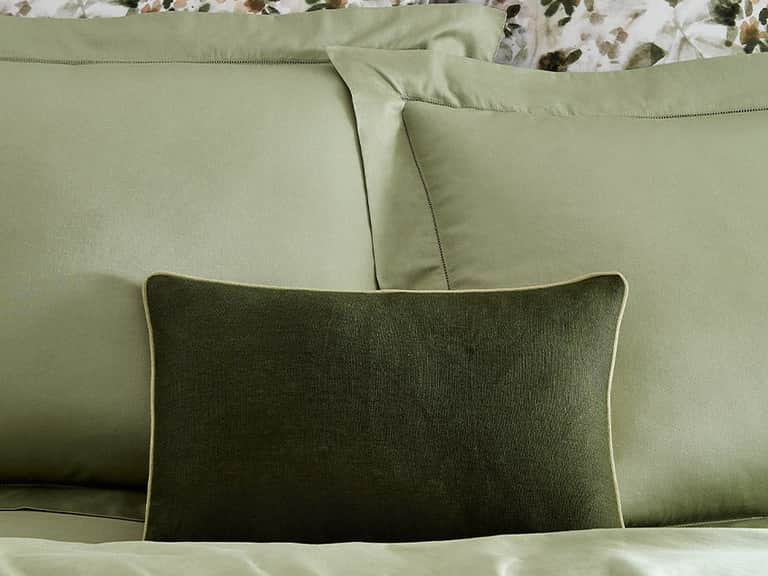
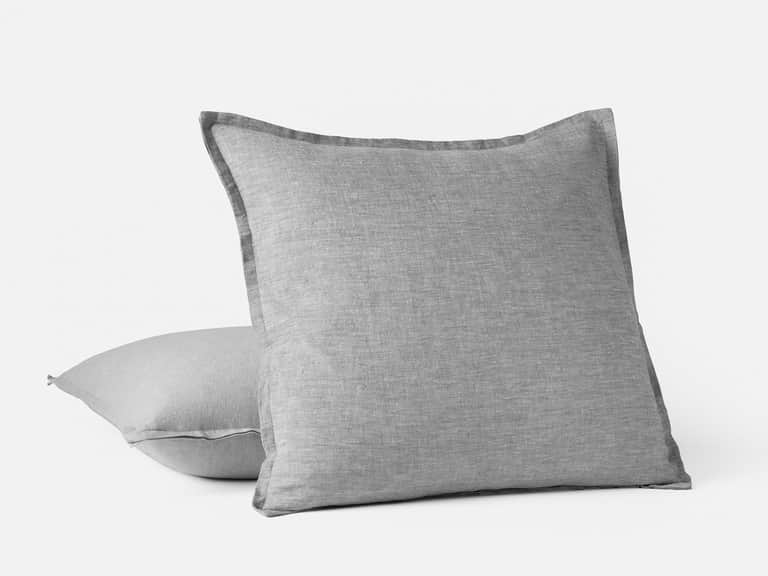
Also check the contents of a set. A duvet cover set may include pillow shams, but the number and size can vary. Naturepedic’s listing describes the cover as coming with two pillow shams and provides separate sham dimensions. Confirm what is included for the size you’re considering, especially if you’re comparing a set with a cover sold on its own.
A small detail that makes a big difference: corner ties
Corner ties are fabric ties inside a duvet cover that attach to corresponding loops on an insert. Their purpose is simple: help keep the insert from sliding into a corner or gathering into a lump. Naturepedic’s listed duvet set includes corner ties to hold the comforter securely.
Before buying, check whether your insert has loops and whether the cover’s ties are positioned to match them. If the insert lacks loops, ties may not attach as intended; some inserts have corner loops, while others have a different arrangement or no attachment points at all. You can check the insert’s label or product details, or ask the manufacturer before assuming the two pieces are compatible.
Closure style matters, too. Buttons, zippers, ties, and other fastenings have different everyday trade-offs. A good closure keeps the insert enclosed while making it practical to remove the cover for washing. Product details do not always specify every closure feature, so look for it in the description or request clarification if it is important to you. Think about who will change the bedding and how often: a small design detail can shape the whole routine.
Read the laundering guidance before you commit
Care instructions should be part of your buying decision, not a detail saved for the first wash. Naturepedic’s listed duvet-cover instructions call for machine washing in warm water, tumble drying on low, warm ironing if desired, and no bleach. The product label should remain your final reference, since directions can differ between fabrics and products.
Other linen items may have different instructions. For example, some relaxed organic linen sheets and pillowcases are specified for a cold, gentle cycle with like colors, while the Naturepedic duvet cover listing gives a warm wash instruction. Those directions shouldn’t be combined into a universal rule for linen. Follow the care guidance for the exact cover you own.
As a general laundry habit, avoid overcrowding the washer. Linen needs enough room to move through the water and rinse properly. Use the recommended amount of detergent, and don’t add bleach or fabric softener unless the care label specifically allows it. Product-specific instructions take priority: a recommendation for one linen throw or sheet set should not automatically be applied to a different duvet cover.
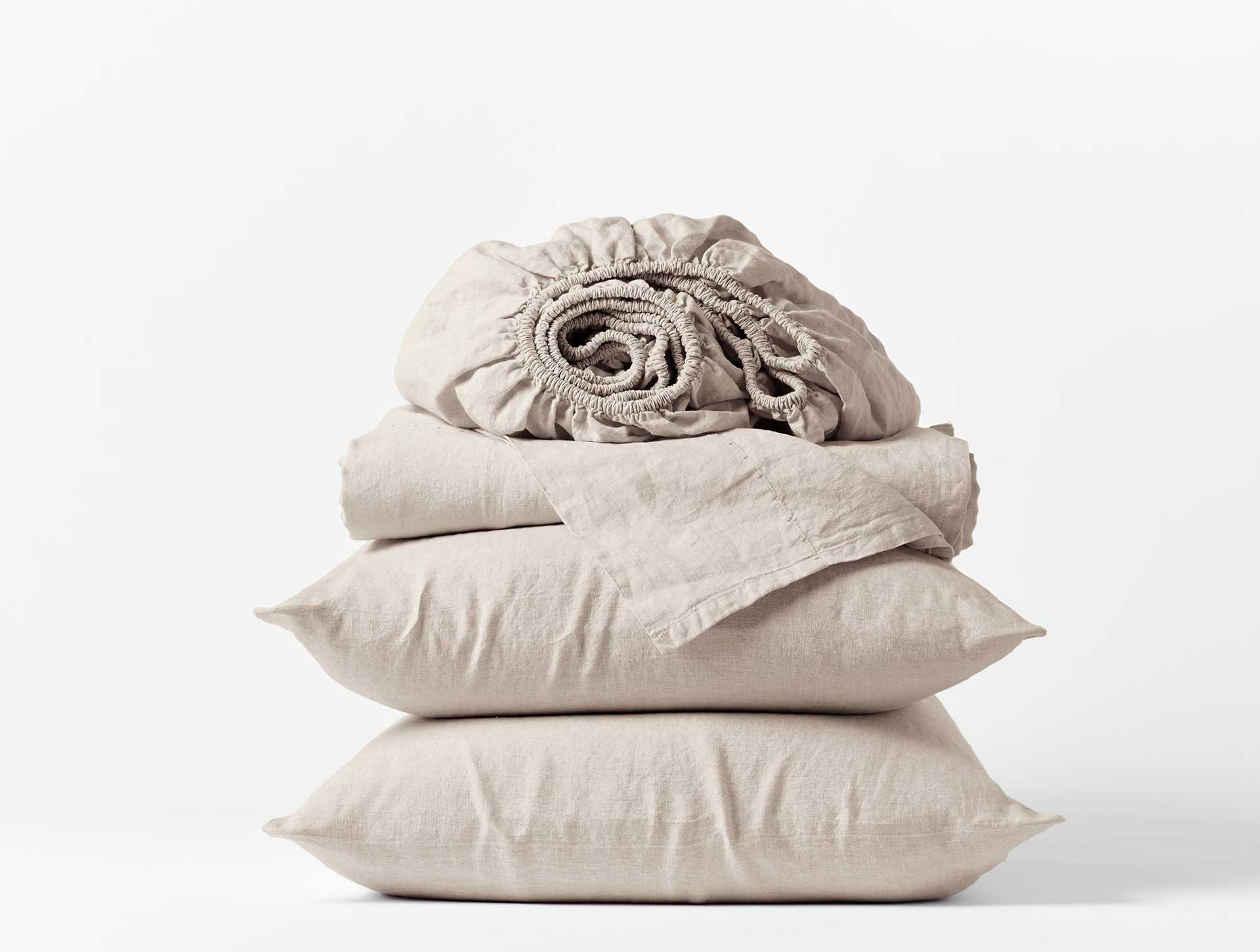
Drying deserves attention as well. Follow the listed temperature, remove the cover when it is dry rather than leaving it exposed to prolonged heat, and smooth or fold it promptly if you want to reduce creasing. Linen’s relaxed texture is part of its appeal for many people, so ironing is optional when the care directions say it is safe. If you prefer a crisp, pressed bed, check whether ironing is permitted and at what temperature.
When washing a cover for the first time, consider laundering it separately or with compatible items of similar color and weight. This can make it easier to manage a large piece of fabric and reduce the chance of color transfer or tangling. For a busy household, realistic care matters: a cover that fits your washing machine, drying setup, and available time is more likely to stay in regular rotation.
How to evaluate Naturepedic as a practical example
The Naturepedic Organic Linen Duvet Cover Sets listing brings several useful comparison points together. It identifies GOTS-certified organic flax grown in France, a 185 gsm linen fabric, stone-washed finishing, two listed size groupings, corner ties, and a warm-water wash with low tumble drying. The set is described as including a duvet cover and two pillow shams.
Those details can be weighed against your own checklist. Does one of the listed dimensions suit your insert? Do the ties work with its loops? Is the warm-wash instruction practical for the way you do laundry? Do you want a pre-washed, relaxed feel? Does the fiber and certification information answer the sourcing questions you care about? These are more useful questions than asking whether a product is simply “the best.” A good match depends on your bed, habits, and preferences.
Remember that product descriptions are starting points, not a substitute for checking the final specifications and care label. Confirm the selected size, exact set contents, color, and current instructions at the point of purchase. If a key fact is not clear—such as closure type or insert-loop compatibility—ask before ordering.
A simple pre-purchase checklist
Before adding an organic linen duvet cover to your bedding rotation, take a moment to review these essentials:
- Fiber: Confirm that the cover is linen and check whether the listing specifies flax sourcing.
- Certification: Look for the name of the certification and what product or material it applies to.
- Weight and finish: Compare gsm when available, and note whether the fabric is stone-washed, garment-washed, or described as relaxed.
- Dimensions: Measure your insert and compare its measurements with the cover, rather than relying solely on the bed-size name.
- Construction: Check seam information, closure details, and whether ties or loops are included.
- Set contents: Confirm whether shams are included and check their sizes.
- Care: Make sure the washing and drying directions work with your household routine.
- Expectations: Consider whether you like linen’s natural texture and relaxed appearance, rather than expecting a perfectly smooth surface.
This checklist isn’t about finding a cover with the longest feature list. It’s about spotting the details that influence comfort and everyday usability, then deciding which ones matter most to you. For one household, an easy laundry routine may be the deciding factor. For another, exact insert fit or a verified organic standard may come first.
A thoughtful choice is one you’ll use and care for
An organic linen duvet cover can bring a breathable feel, visible texture, and a relaxed finish to a bedroom. But the most satisfying choice is not defined by a label alone. It comes from matching the fabric and construction to your preferences, checking that the measurements work with your insert, and making sure the care instructions are realistic for your home.
Start with verifiable information about the fiber and certification. Then move to the tactile details: weight, weave, and finish. Check the practical pieces—ties, closures, dimensions, and what comes in the set—and finish by reading the laundering guidance. With those steps, a duvet cover becomes easier to assess for what it really is: a frequently used textile that should feel comfortable, fit properly, and remain manageable over time.
Linen’s appeal often lies in its unforced character. A little texture, a softening feel with use, and a bed that looks welcoming rather than overly arranged can be part of the experience. Careful shopping helps make sure that easygoing look is supported by details that work just as well in real life.